AlIhsanpubs
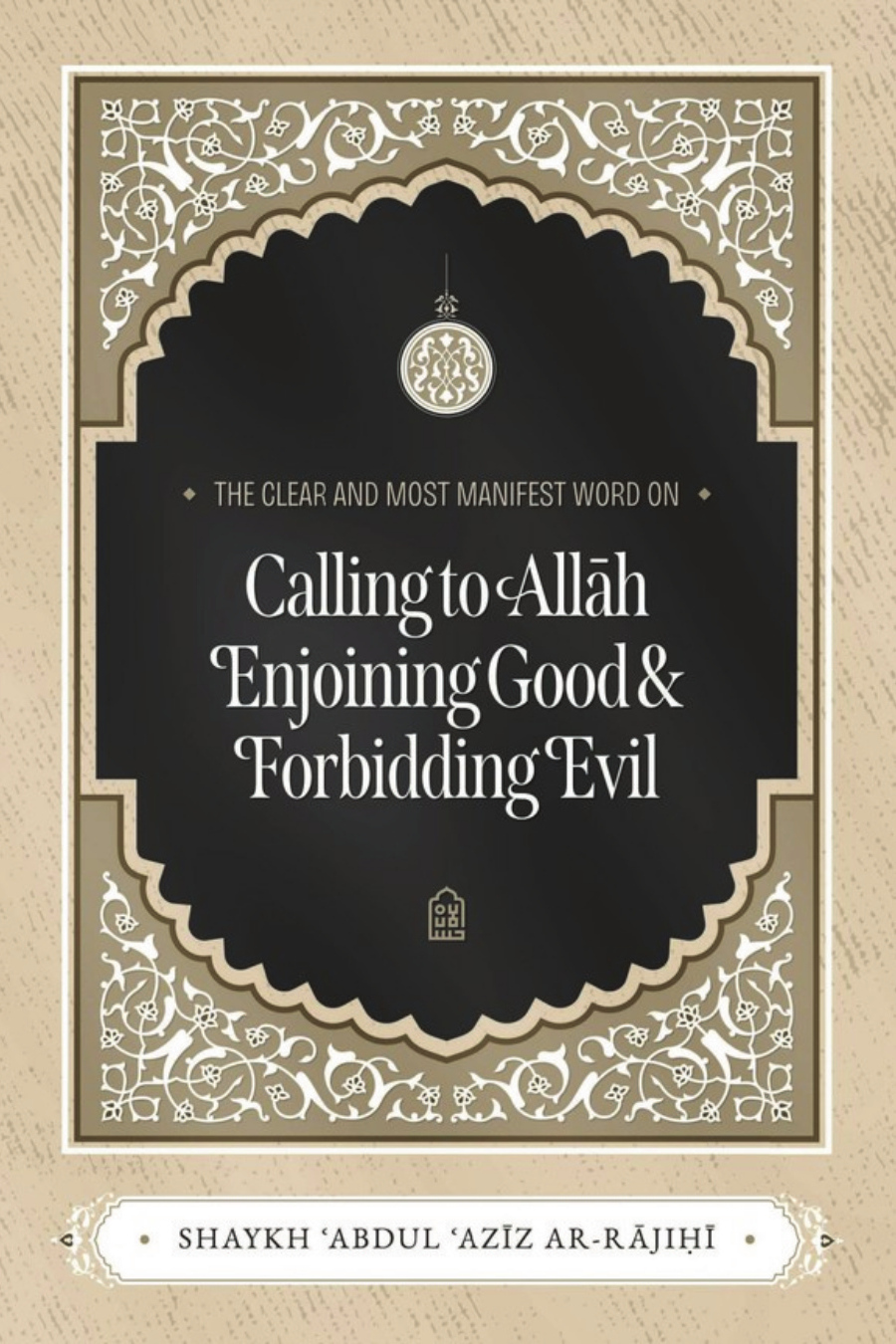
by Shaykh Abdul Aziz Ibn Abdullah Al-Raajihi
From the book:
Indeed, calling to Allāh, enjoining good, and forbidding evil is a great foundational principle of Islām. Some scholars have even considered it among the pillars of Islām upon which its structure does not stand without. And this is not surprising, for the well-being of the servants in their livelihood depends upon obedience to Allāh and His Messenger, and perfecting that obedience is dependent upon enjoining good and forbidding evil. By way of this, this Ummah has become the best nation brought forth for mankind.
Due to the lofty position of this principle in the religion, and because most people in this era have become negligent regarding it — many abandoning it entirely, while others show undue leniency — the result has been the widespread emergence and dominance of evil, to the point that land, sea, and sky have become filled with it.
Thus, I saw it suitable to write a brief treatise on this matter, in which I clarify the great importance of this obligation, the consequences of neglecting it, and the discussions that follow from it, despite my limited capacity in doing so, hoping to fulfill at least part of the duty. Even though I am not among the people of that path.
Provider of authentic Salafi literature worldwide
About the book:
Explanation of Aspects Jāhiliyyah: Pre-Islāmic Era of Ignorance is a profound work that uncovers the defining traits, beliefs, and practices that characterized the age of ignorance prior to the advent of Islam. Authored by Shaykh Muḥammad bin ʿAbd al-Wahhāb, this timeless treatise identifies the core deviations that led nations away from true guidance—many of which continue to manifest in subtle and overt ways even today.
In this insightful explanation, Shaykh ʿAbdul Azeez ar-Rājihī elaborates on these critical themes with clarity and depth, drawing lessons that are both relevant and transformative. This work serves as a mirror for self-reflection and a guide to safeguarding one’s faith, helping readers recognize and distance themselves from the remnants of Jāhiliyyah to uphold the purity of Islām.
From the book:
"The Strangeness of al-Islam is an important and reflective work that highlights the defining qualities of Islam as a faith that often appears "strange" in times of widespread deviation. Authored by Shaykh Muhammad Khalil Harras, this treatise outlines the essential principles that distinguish true Islam — beginning with the absolute oneness of Allah and the centrality of the Messenger, and including a firm opposition to idolatry and corruption. It presents these foundations clearly, showing how Islam remains a path of truth amidst confusion.
The reader is guided through Islam's balance of ease, tolerance, and completeness, demonstrating its role as a comprehensive way of life that liberates individuals from worldly constraints. Emphasizing both belief and action, the book calls for sincere adherence and practical implementation. Concluding with a question-and-answer section, it serves as a reminder and guide for upholding the principles of Islam in an ever-changing world."
From the book:
"The Path to Marital Happiness in Light of the Quran and Authentic Sunnah by Shaykh Abdullah al-Jar Allah is a concise guide to building a stable and blessed marriage based on the Quran and authentic Sunnah. The author outlines the roles, rights, and responsibilities of Muslim men and women, emphasizing modesty, proper conduct, and mutual respect as the foundation of harmony and trust within the home.
The book also addresses practical aspects of married life, including polygyny, child upbringing, and challenges that may affect marital stability. With sincere advice for spouses and guardians, it offers solutions rooted in Islamic wisdom, reminding readers that true marital happiness lies in aligning family life with the guidance of Allah and His Messenger."