Wide distribution means selling your book on multiple platforms simultaneously rather than being exclusive to one retailer. A "wide" author sells on Amazon, Apple Books, Kobo, Barnes & Noble, Google Play, libraries, and often through direct sales — reaching readers wherever they prefer to buy.
In indie publishing, "going wide" has become a philosophical stance as much as a distribution strategy. It represents a deliberate choice: spread your eggs across multiple baskets instead of betting everything on Amazon.
The debate between wide and exclusive (KDP Select) has been raging for years. There's no universally right answer — but there's probably a right answer for you, and understanding the trade-offs helps you find it.
Wide vs Exclusive: The Core Trade-off
Here's the fundamental choice:
Exclusive (KDP Select): Give Amazon your ebook exclusively for 90 days at a time. In return, you get Kindle Unlimited access (page-read income), promotional tools (Countdown Deals, Free promos), and simplicity. One platform, one dashboard, one strategy.
Wide: Sell everywhere with no exclusivity. Amazon, Apple, Kobo, B&N, Google, libraries, and direct sales. More complexity, more dashboards — but multiple income streams, reduced risk, and you keep your customer data on direct sales.
✓ Wide Distribution
- Multiple income streams
- Not dependent on one company
- Reach readers on all devices
- Can sell direct (keep customer data)
- Higher royalties on direct sales
- Long-term business stability
✗ Exclusive (KDP Select)
- Locked to Amazon for 90 days
- No Apple, Kobo, or direct sales
- KU page rate controlled by Amazon
- No customer email access
- Entire income at Amazon's mercy
- Must renew every 90 days
Where Wide Authors Sell
Going wide means understanding your platform options. Here's the landscape:
Amazon KDP
Yes, wide authors still sell on Amazon — they just aren't exclusive to it. Amazon remains 60-70% of the ebook market. You don't skip it; you just don't give it everything.
Apple Books
Strong in certain genres, especially romance. Apple users tend to buy rather than subscribe. Higher royalties than KU page reads. Upload directly or through an aggregator.
Kobo
Dominant in Canada, growing in the UK and Australia. Has Kobo Plus (their subscription service) in some markets. Good for reaching international readers.
Barnes & Noble / Nook
Smaller market share but still meaningful for US readers with Nook devices. Upload through B&N Press or aggregators.
Google Play Books
Often overlooked but has global reach. More volatile than other platforms — Google has pulled out and re-entered the market. Currently accepting new publishers.
Libraries (via OverDrive, Hoopla)
Distributed through aggregators like Draft2Digital or PublishDrive. Libraries buy or license your book; readers borrow it. Good for exposure and legitimate income.
Direct Sales (Books.by)
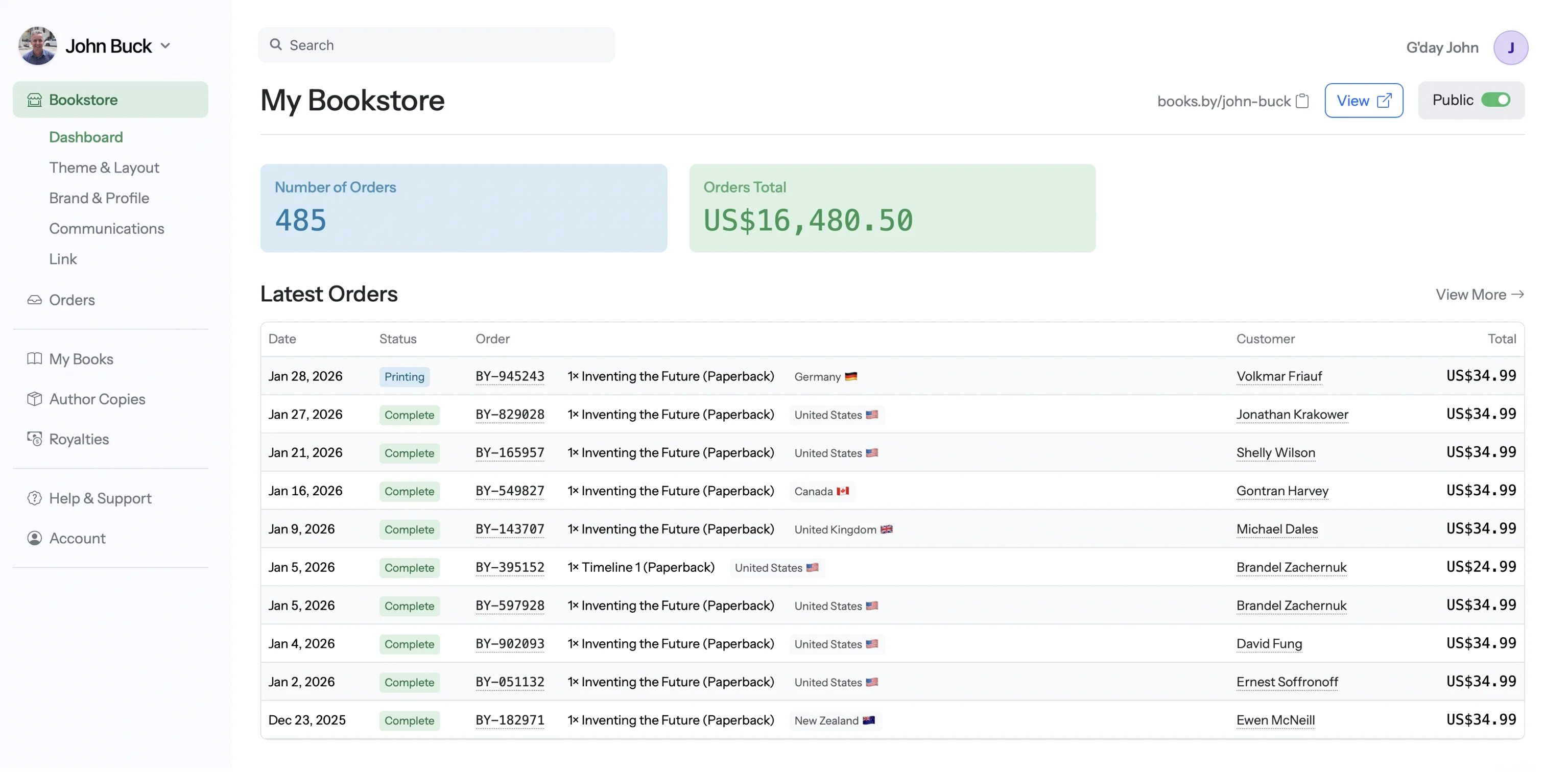
Sell directly from your own storefront. Keep 100% royalties, get customer emails, get paid daily. This is where wide authors make the highest per-sale income — and build lasting reader relationships.
Aggregators: Simplifying Wide
Managing uploads to 6+ platforms sounds exhausting. Aggregators solve this by distributing your book to multiple retailers from a single dashboard.
Draft2Digital: The most popular aggregator. Distributes to Apple, Kobo, B&N, libraries, and more. Free to use; they take a small percentage of sales. Clean interface, reliable service.
PublishDrive: Flat monthly fee model. Good for authors with higher sales volume who want predictable costs.
Smashwords: One of the originals. Now merged with D2D. Still has its own storefront and distribution network.
Most wide authors use a hybrid approach: upload directly to Amazon (better control) and use an aggregator for everything else. Direct sales through Books.by complement this strategy — you handle your own traffic directly, retailers handle discovery.
The Direct Sales Piece
Here's what many wide authors miss: retailers are great for discovery, but terrible for margin.
When someone finds your book through Apple or Kobo and buys it, wonderful. But when someone finds you through your podcast, newsletter, social media, or speaking gig — and you send them to Amazon — you're giving away 30-65% of that sale to a middleman who did nothing to earn it.
The smart wide strategy: Use retailers for organic discovery (let their algorithms work for you). Use direct sales (like Books.by) for traffic you generate yourself. Send your email list, social followers, and podcast listeners to your own store where you keep nearly everything.
On Books.by, you keep 100% of royalties minus print costs and payment processing (~2.9% + $0.30). On a $15.99 print book, that's roughly $11 in your pocket vs. $5-6 through Amazon. For traffic you're generating anyway, that's a significant difference.
When to Go Wide
Consider going wide if:
- You're building a long-term author business
- You have (or want) a direct relationship with readers
- You publish non-fiction or higher-priced books
- You're uncomfortable with all your income depending on Amazon
- Your genre has strong readership on Apple or Kobo
- You're already generating your own traffic (email list, social media, podcast)
Consider staying exclusive if:
- You're brand new and want simplicity
- You write in genres with heavy KU readership (romance, thriller)
- Your page-read income significantly exceeds what you'd earn wide
- You publish frequently and need KU's velocity flywheel
Many successful authors start exclusive to build momentum, then go wide as they develop an audience and want more control.
How to Go Wide from KDP Select
Ready to make the switch? Here's the process:
- Check your enrollment end date. In KDP, go to your book's KDP Select Info. Note when your current 90-day term ends.
- Disable auto-renewal. Turn off the automatic re-enrollment. You must do this before the period ends or you're locked in for another 90 days.
- Wait for the term to expire. You cannot exit mid-term. Plan your wide launch for after expiration.
- Prepare your files. Make sure your EPUB is ready for other platforms. Most accept the same file Amazon does.
- Upload to other retailers. Use an aggregator like Draft2Digital, or upload directly to Apple, Kobo, etc.
- Set up direct sales. Create your Books.by storefront and start capturing your highest-margin sales.
Your Amazon presence is unaffected — you remain on Amazon, just no longer exclusive. You lose access to KU page reads and promotional tools, but gain the freedom to sell everywhere.
Frequently Asked Questions
Wide distribution means selling your book on multiple platforms rather than exclusively on Amazon. A "wide" author might sell on Amazon, Apple Books, Kobo, Barnes & Noble, Google Play, libraries, and through direct sales — reaching readers wherever they prefer to shop.
It depends on your goals. Wide distribution offers more control, multiple income streams, and reader data ownership but requires more effort. KDP Select is simpler and can work well for certain genres with strong KU readership. Many authors start exclusive then go wide as they build an audience.
Major platforms include Amazon KDP, Apple Books, Kobo, Barnes & Noble, Google Play Books. Aggregators like Draft2Digital and Smashwords distribute to multiple retailers. Direct sales platforms like Books.by let you sell from your own storefront. IngramSpark handles bookstore and library distribution.
Yes, and you should. Direct sales through Books.by can coexist with retail distribution. You just cannot be in KDP Select while selling the same ebook elsewhere. Many authors use retailers for discoverability and direct sales for their own traffic, keeping higher royalties on the sales they generate.
Disable auto-renewal in your KDP Select settings before your 90-day period ends. Wait until the term expires. Then you are free to upload your ebook to other platforms. The process takes planning — you cannot exit mid-term.
No. Leaving KDP Select does not affect your Amazon presence — you are still on Amazon, just not exclusive to it. You lose access to Kindle Unlimited page reads and the promotional tools (Countdown Deals, Free promos), but your book remains for sale on Amazon.