Ash Davies
Founder of Books.by · Helped 50,000+ authors self-publish since 2014
Lulu is free and easy, but its limited distribution and low marketplace traffic leave many authors looking elsewhere. Here are four alternatives with better reach and higher royalties.
Lulu isn't bad — it's just limited. Here's where authors typically hit walls:
The Lulu marketplace is tiny. Lulu has its own bookstore where readers can discover and buy books. The problem? Almost nobody shops there. Compared to Amazon's hundreds of millions of active customers, Lulu's traffic is negligible. You might sell a few copies to people who specifically search for Lulu, but organic discovery is essentially non-existent.
Distribution doesn't equal sales. Yes, Lulu can distribute to Amazon, B&N, and other retailers. But "available on Amazon" and "selling on Amazon" are very different things. Books distributed TO Amazon from Lulu don't get the same algorithmic boost, Prime eligibility, or recommendation placement as books published natively through KDP.
Royalties are a mystery box. Lulu's royalty structure is opaque. You might earn 50% on one sale and 80% on another, depending on where the book was purchased and what discounts apply. This unpredictability makes it hard to price strategically.
Payout timing is slow. Monthly payouts with a $20 minimum threshold means you might wait months to see your first check if you're not selling steadily.
None of this makes Lulu unusable — it's still free and functional. But if you want to actually sell books, there are better tools available.
| Platform | Cost | Typical Royalty* | Marketplace Traffic | Bookstore Distribution | Best For |
|---|---|---|---|---|---|
| Lulu | Free | $4.50 | Very Low | ✓ Limited | Simple POD, specialty formats |
| Amazon KDP | Free | $5.74 | Massive | ✗ | Amazon marketplace sales |
| Books.by | $99/year | $9.60 | Your traffic | ✗ Direct only | Direct sales, own audience |
| IngramSpark | $49/title | $3.75 | N/A | ✓ 40,000+ retailers | Bookstores & libraries |
| Draft2Digital | Free | $4.20 (ebook) | Via retailers | ✓ | Wide ebook distribution |
*Based on a 200-page B&W paperback at $19.99 retail.
If you're on Lulu hoping readers will discover your book, you're waiting for traffic that doesn't exist. Amazon KDP solves this problem immediately.
The verdict: For standard books (novels, nonfiction, memoirs), KDP should be your primary platform, not Lulu. The traffic difference is night and day.
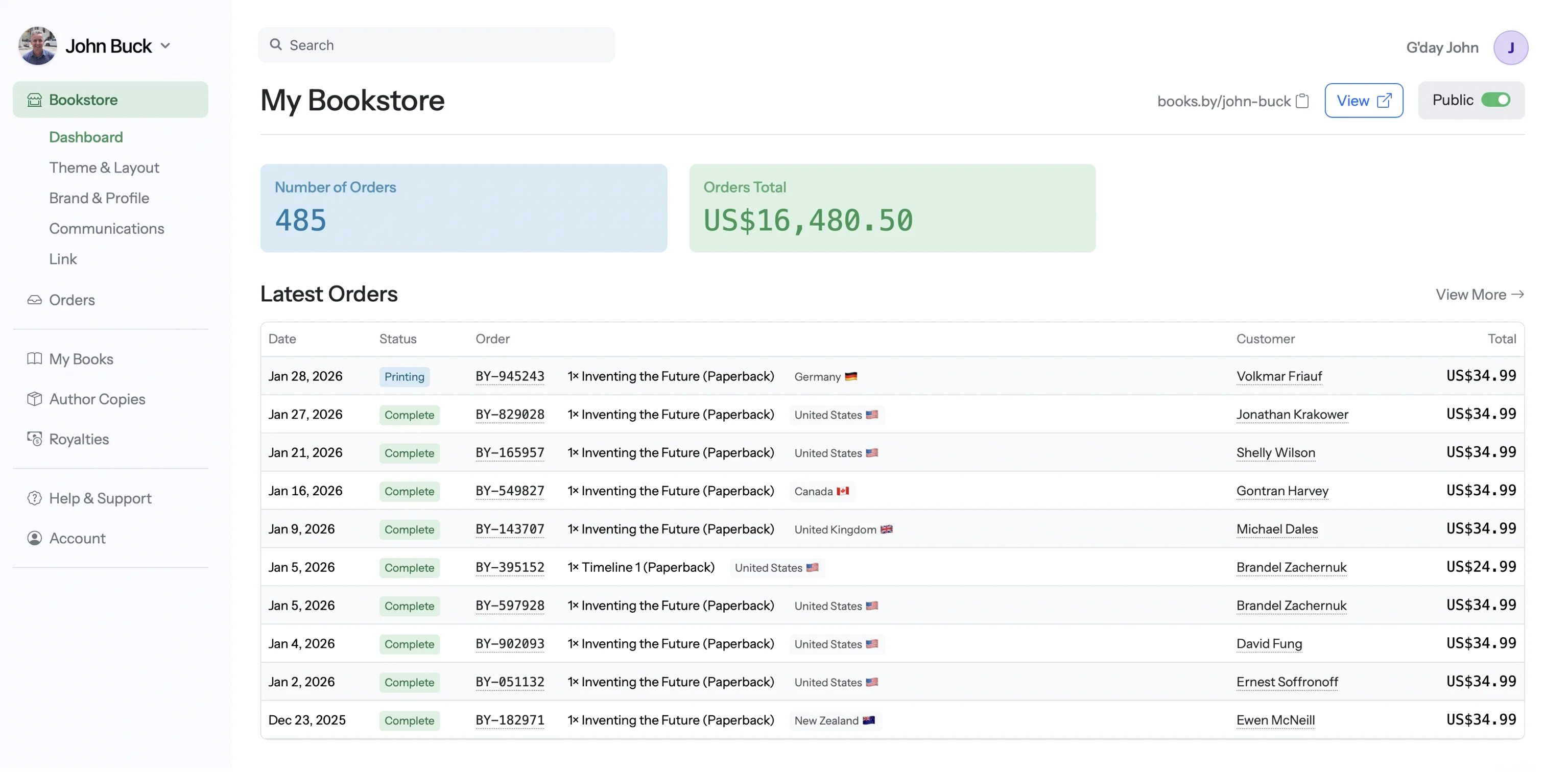
Here's what Lulu, KDP, and IngramSpark all have in common: they're middlemen. They sit between you and your readers, taking a cut. Books.by is different.
The verdict: Books.by isn't a replacement for Lulu — it's a complement. Use KDP/IngramSpark for organic discovery, use Books.by for all the readers you bring yourself. Keep 100% of what your marketing generates.
Lulu claims to offer bookstore distribution, but it's not well-integrated with how bookstores actually order. IngramSpark is the industry standard.
The verdict: If bookstores and libraries are your goal, IngramSpark is the only serious choice. Lulu's distribution is an afterthought; Ingram's is the backbone of the book industry.
Lulu offers ebook distribution, but it's not their focus. If ebooks are a significant part of your strategy, D2D is purpose-built for wide digital distribution.
The verdict: For ebook authors going wide (non-Amazon-exclusive), D2D is essential. Much better than Lulu's ebook offering.
That said, Lulu does have genuine use cases:
Don't put all your books in one basket. Use KDP for Amazon marketplace sales. Add IngramSpark for bookstores and libraries. Use D2D for wide ebook distribution. And add Books.by for direct sales where you keep 100%. Lulu can remain one piece of this puzzle — just don't make it your only piece.
The main reasons are limited distribution reach, low traffic on Lulu's marketplace, variable royalty rates, and slower payouts. Authors often find better results with Amazon KDP for marketplace sales or IngramSpark for bookstore distribution.
For marketplace sales, yes. Amazon KDP offers access to Amazon's massive customer base, Prime shipping, algorithmic recommendations, and generally higher royalties per book. Lulu's marketplace has far less traffic and discoverability.
IngramSpark. It distributes to 40,000+ retailers including Barnes & Noble and independent bookstores, plus libraries. Lulu's distribution to retailers isn't as comprehensive or well-integrated with bookstore ordering systems.
Yes, Lulu's print quality is generally good, especially for specialty products like photo books and calendars. For standard paperbacks and hardcovers, quality is comparable to KDP and slightly below IngramSpark's premium options.
Absolutely, and most successful authors do. Use KDP for Amazon sales, IngramSpark for bookstore distribution, and a direct sales platform like Books.by for your own audience. Each platform has different strengths.
Lulu's royalties vary widely (50–90%) depending on where the book is sold. Books sold on Lulu.com earn higher royalties, while books sold through distribution channels earn significantly less due to retailer discounts.
Lulu offers ebook distribution, but it's not their strength. Draft2Digital provides better ebook distribution to Apple Books, Kobo, and other retailers. For Kindle specifically, you need to publish directly through Amazon KDP.
Use KDP and IngramSpark for distribution. Use Books.by for your own traffic. Daily payouts, customer emails, and real royalties.
Start Your Bookstore →