
I'll tell you something the self-help industry doesn't advertise: readers are simultaneously desperate for good books and deeply cynical about the genre. They've been burned by empty promises and padded content. They've bought books that rehash the same advice dressed in different language. They've paid for transformation and received platitudes.
This creates an unusual opportunity. The bar for self-help has been lowered by a flood of mediocre content — which means genuinely helpful books stand out dramatically. If you have real expertise, specific insights, and actionable frameworks, you can build a devoted readership. If you're a coach, therapist, or speaker, a well-crafted book extends your impact far beyond what one-on-one work allows.
But the genre demands authenticity. Readers can smell fake gurus. They can detect recycled advice. They know when someone is speaking from experience versus regurgitating other books. The path to success runs through genuine authority and specific value — not clever marketing of thin content.
Do You Need Credentials to Write a Self-Help Book?
Before anything else: can you write this book? It's a question worth asking honestly, because the self-help market punishes overreach.
When Credentials Matter
If you're writing about clinical topics — anxiety disorders, trauma, addiction, eating disorders, clinical depression — professional credentials aren't optional. They're essential for credibility and legally prudent. Writing about treating anxiety without clinical training invites criticism at best and liability at worst.
This doesn't mean only licensed therapists can write about mental health. But your positioning must be accurate. A coach can write about stress management; claiming to treat clinical anxiety requires licensure. The line matters, and your readers' wellbeing depends on you respecting it.
When Experience Substitutes for Degrees
For many self-help topics — productivity, relationships, career transitions, personal finance, habit formation, creativity — lived experience and demonstrated results can substitute for formal credentials. You don't need a PhD to write about recovering from burnout if you've actually done it and helped others do the same.
The key is specificity of authority. What exact area do you know deeply? Who have you helped? What results can you point to? Generic life wisdom isn't enough. Specific, demonstrated expertise is.
Building Authority Through the Book
Here's the circular reality of self-help: a book builds the authority that makes people read the book. For coaches and speakers without established platforms, your book becomes your platform. Each copy sold extends your reach. Each reader who gets results becomes a testimonial.
This means your first book doesn't need a massive existing audience — it needs to genuinely help the readers it reaches. Those readers become your advocates, your testimonials, your proof of concept.
Understanding Who Reads Self-Help
Self-help readers are often in active pain. They're searching for solutions to problems they're currently facing — relationship struggles, career stagnation, anxiety, lack of purpose, overwhelm. This urgency shapes how they discover and buy books.
They search for solutions. Self-help discovery is heavily search-driven. People Google their problems. "How to stop procrastinating." "How to deal with a narcissistic parent." "How to rebuild confidence after divorce." Your book title and positioning should speak directly to these searches.
They buy based on promise. Your subtitle and description must clearly articulate what transformation readers will experience. Vague promises fail. Specific outcomes sell. "Feel more confident" is weak. "Speak up in meetings without anxiety" is strong.
They're skeptical but desperate. They want your book to work. They've been disappointed before. They're reading reviews carefully, checking your credentials, and assessing whether you seem real. Authenticity matters enormously.
They want action, not theory. The books that get results and recommendations are the ones with exercises, worksheets, and specific practices. Pure concept books get read once and forgotten. Books with homework get implemented and recommended.
Workbooks and Companion Materials
If your self-help content is actionable — and it should be — a companion workbook multiplies your impact and your revenue.
Why Workbooks Work
A workbook transforms passive reading into active practice. Instead of hoping readers take notes, you give them structured space to work through your exercises. This dramatically increases the likelihood they'll actually implement your advice, get results, and recommend your work.
For coaches and therapists, workbooks serve an additional purpose: they can be used with clients. A therapist might assign workbook exercises between sessions. A coach might work through chapters with clients as part of their program. The book becomes a tool in your practice, not just a product you sell.
Workbook Formats
Companion workbook: Designed to be used alongside your main book. Each chapter of the workbook corresponds to a chapter in the book, with exercises that deepen the material.
Standalone workbook: Contains enough explanatory content to work independently. Better for clients who may not have read your main book.
Hybrid format: Your main book includes workbook elements (exercises, reflection questions, worksheets) throughout. This approach keeps everything in one volume but may limit space for actual writing.
Print-on-Demand for Workbooks
Workbooks are perfect for print-on-demand. They're almost always used in print (people write in them), and POD means you don't need to inventory hundreds of copies. On Books.by, you can offer workbooks through your own storefront, sell bundles with your main book, and use them in your coaching practice — all printed as orders come in.
Structuring Your Self-Help Book
The structure of a self-help book should map to transformation. Readers start at Point A (the problem) and finish at Point B (the solution implemented). Your structure is the path between them.
The Classic Framework
- The Problem: Show readers you understand exactly what they're experiencing. Articulate the pain better than they can. This builds trust.
- The Promise: Define the specific outcome they can achieve. Be concrete about what life looks like after implementing your advice.
- The Framework: Introduce your method, system, or approach. Give it a name. Make it memorable and teachable.
- The Components: Break down each element of your framework with explanation, examples, and exercises.
- The Integration: Help readers put the pieces together. Address common obstacles. Provide maintenance strategies.
Length Considerations
Most successful self-help books land between 40,000-60,000 words. Long enough to provide substantial value, short enough that readers actually finish. Some focused books are even shorter (25,000-35,000 words) — if the concept is tight, brevity is a feature.
What readers hate: padding. They can tell when you're stretching thin material to hit a word count. Every anecdote, every research citation, every exercise should earn its place. Ruthless editing builds trust.
Research and Citations in Self-Help Books
Self-help exists in an interesting space between academic writing and pure personal narrative. Readers want evidence that your approach works, but they don't want to read a journal article.
Evidence That Builds Credibility
- Research citations: Reference relevant studies, but translate them into plain language. Readers appreciate knowing there's science behind your claims.
- Case studies: Anonymized examples of clients or others who've used your approach successfully. Show the transformation in action.
- Your own story: If you've overcome what you're teaching, share it with appropriate vulnerability. Readers connect with genuine experience.
- Testimonials: Quotes from people you've helped. These can appear in the book itself or as supplementary material.
What to Avoid
Unsupported medical claims: Don't promise to cure anything. Be precise about what you're offering.
Misrepresenting research: Readers are increasingly savvy. If you cite a study, represent it accurately. Cherry-picking or exaggerating results damages trust.
Fake authority: Don't imply credentials you don't have. Don't inflate your experience. The self-help world is small enough that fraud gets discovered.
Selling From Your Own Platform
If you're a coach, therapist, speaker, or consultant, your book shouldn't live primarily on Amazon. It should live on your website, integrated into your business ecosystem.
Why Direct Sales Matter for Self-Help Authors
When someone reads your book and wants more help, where do they go? If they bought on Amazon, you've lost them — they'll search Amazon for the next book, which might be a competitor's. If they bought from your website, they're already there. They see your coaching offerings, your courses, your speaking page.
The book becomes an entry point, not an endpoint. A reader who buys your book on managing anxiety might become a coaching client. A therapist who buys your workbook might hire you for training. These conversions only happen if you own the customer relationship.
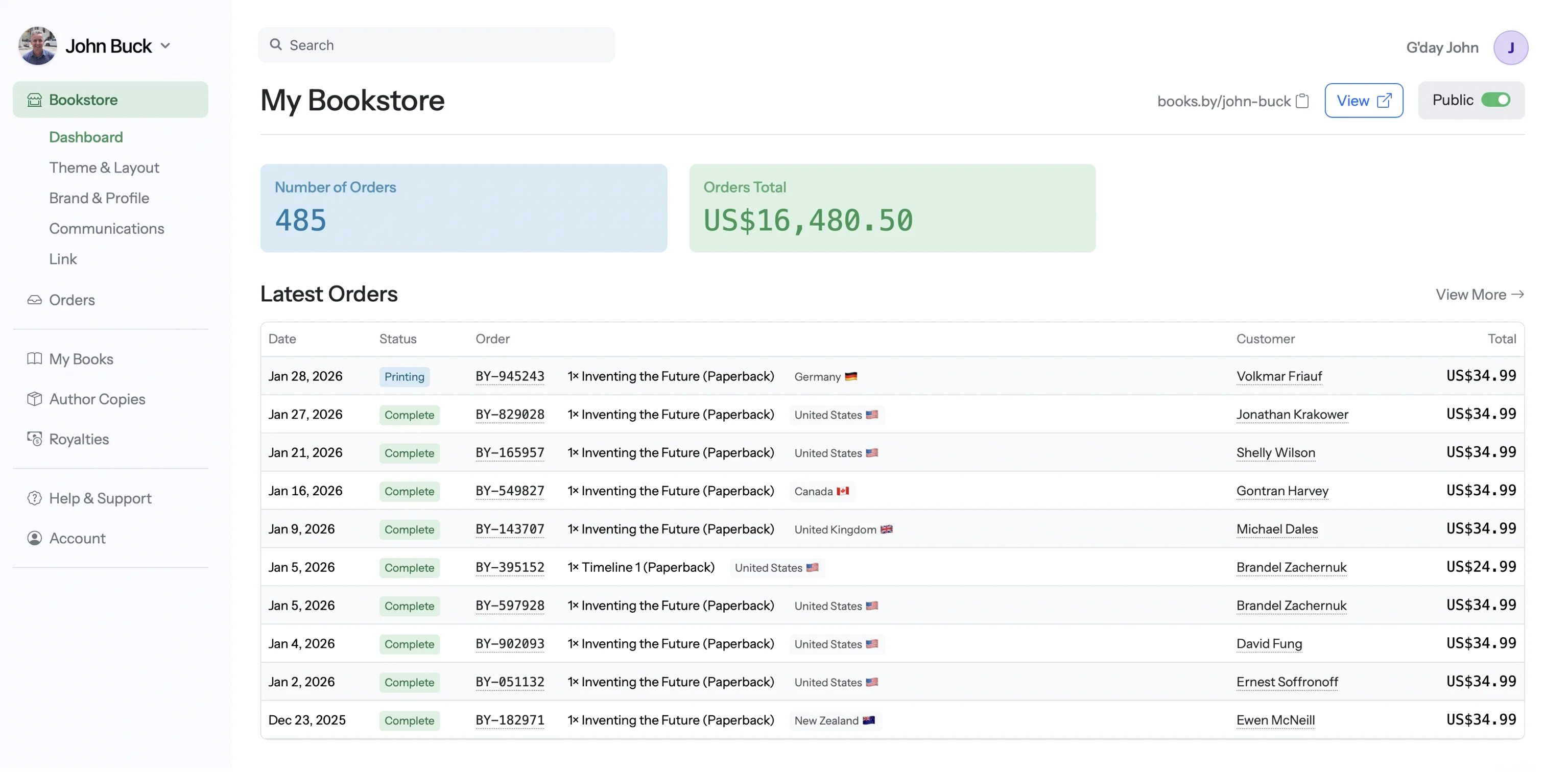
With Books.by, you create a storefront that matches your branding, sell directly from your coaching website, and capture customer emails. The book integrates into your funnel rather than diverting traffic to Amazon.
The Email Capture Advantage
Every book sale on your own platform is an email list subscriber (with permission). These are people who've already bought from you — they're far more likely to purchase coaching, courses, or future books than cold traffic. Your book becomes a list-building machine.
Sell Your Self-Help Book From Your Coaching Website
Capture customer emails, keep 100% of royalties, and integrate your book into your coaching business. Print-on-demand workbooks with no minimums.
Pricing Self-Help Books and Workbooks
Self-help commands premium pricing compared to fiction. Readers are buying transformation, not entertainment — and they'll pay appropriately for genuine value.
| Format | Price Range | Notes |
|---|---|---|
| Ebook (standard) | $4.99 – $9.99 | Higher end for established authors or premium positioning |
| Paperback | $14.99 – $19.99 | Self-help buyers often prefer physical copies |
| Hardcover | $24.99 – $29.99 | Premium positioning, gift market |
| Workbook | $19.99 – $29.99 | Higher than books because of practical utility |
| Book + Workbook Bundle | $34.99 – $44.99 | Discount vs. buying separately incentivizes bundle |
When selling through your own coaching practice, you can often charge more than retail. Clients already trust you; the book is an extension of working with you, not an anonymous purchase.
Calculate Your Royalties
See how much more you could earn selling self-help books directly through Books.by compared to Amazon KDP.
Marketing Self-Help Books
Self-help marketing differs significantly from fiction marketing. Your audience finds you through problem-oriented searches, professional communities, and existing platforms.
What Works
Speaking engagements: Your book makes you bookable. Conferences, workshops, and corporate events all want speakers with books. Sell at the back of the room.
Podcast guesting: Personal development podcasts are always looking for guests with specific expertise. Your book gives you credibility and a hook.
Email list building: Offer a free chapter, assessment, or mini-course in exchange for email signup. Nurture the list toward book purchase and eventually coaching.
Your existing clients: Every coaching client should get your book. Every workshop attendee should leave with a copy. Your warm audience is your best first market.
Professional communities: Therapist networks, coaching associations, corporate HR groups. If your book serves a professional audience, go where they gather.
What Often Fails
Generic book marketing tactics: BookBub and Facebook ads work less well for nonfiction than fiction. The targeting is harder, and the impulse-buy behavior is different.
Trying to compete with celebrity authors: You're not going to out-market Brené Brown. Position around a specific niche where you have genuine authority, not the broad self-help market.
Frequently Asked Questions
For clinical topics like anxiety, trauma, and addiction, professional credentials are essential. For personal development, productivity, and relationships, lived experience and demonstrated results can substitute — but you need specific authority, not just general wisdom.
Yes, if your content is actionable. Workbooks deepen engagement and create a second revenue stream. Many coaches use workbooks with clients. Print-on-demand makes workbooks viable even for small audiences.
40,000-60,000 words is typical. Some focused books are shorter (25,000-35,000 words). Readers hate padding — every page should earn its place. Brevity with substance beats length with filler.
Start with specificity — niche expertise stands out. Build credibility through case studies, testimonials, and research citations. Your book itself becomes a platform; use it to grow your email list and coaching practice.
Yes, and you should. Direct sales keep visitors in your ecosystem, capture emails, and give you full margin. Books.by handles printing and fulfillment. Your book becomes part of your coaching business.
Ebooks: $4.99-$9.99. Paperbacks: $14.99-$19.99. Workbooks: $19.99-$29.99. When selling through your coaching practice, you can often price higher because buyers already trust you.
Successful books deliver transformation, not just information. They have specific promises and actionable exercises. Failed books are generic, padded, or overpromise. Readers are sophisticated — they spot empty content immediately.